According to ABI Research, more than four million robots will be employed in more than 50,000 warehouses by 2025 globally, rockets from just under 4,000 robotic warehouses in 2018.
The accelerating rate is pushed forward by the intensified expectation from customers engaged in e-commerce, which same-day delivery becomes the norm. Flexibility and efficiency have become distinctive attributes of retailers and third-party logistics providers (3PLs) in the e-commerce driven market in meeting fluctuating demand. A more accommodating and proficient system is needed, while the affordability and Return on Investment (ROI) of warehouse robotics have been increased over time compare with traditional fixed machines or manual operations.
Industry leader such as Amazon develops its own version of robots for fast and accurate fulfillment. Some retailers and 3PLs look forward to companies offering a wide range of models that fit their size and type of operations.
Cainiao is a technology-driven socialized logistics collaboration platform under the Alibaba Group. Inside Cainiao’s Internet of Things (IoT) systems robotic automation distribution centre in Nanjing, newly opened in January 2019, more than a hundred robots classify parcels to over 60 distribution centres in Nanjing. The IoT system empowers robots to work in different scenarios, smart equipment with function of image-recognition, near-field sensing systems and acoustic-photoelectric systems, all of which will help connecting orders, equipment and workers efficiently. Cainiao’s smart warehouse in Wuxi, Jiangsu is equipped with 700 automated guided vehicles (AGVs). The IoT technology can automatically direct AGVs to drive, load and unload. Within the same time frame, 50% more orders can be fulfilled by the entire warehouse than that of a traditional one.
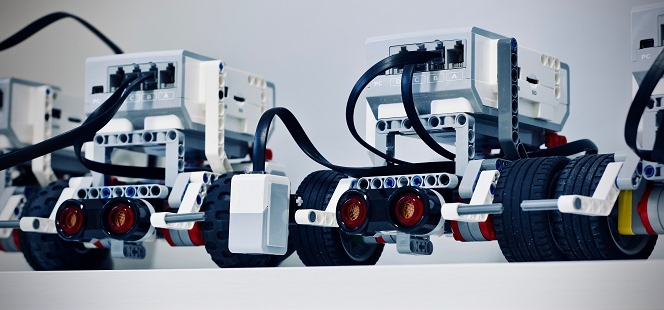
At China e-commerce giant JD.com’s automated warehouse in Shanghai, opened in June 2018, 20 industrial robots with autonomous and intelligent action can pick, move, and pack packages, while other robots convey packages to loading docks and trucks. The factory also equips with camera systems and robot controllers. The highly-automated sorting technology sorts up to 16,000 packages per hour with 99.99% accuracy. The automated warehouse cuts human workers from 400 to just four to monitor the robots. Over 90% of its first-party orders are delivered either within the same day or the next day across China. It aims to provide one-hour delivery in chosen cities. JD.com has also extended automation to its logistics process through a network of autonomous drones based in Shaanxi province.
According to the Top 100 Retailers in Asia-Pacific report by Euromonitor International, Amazon is China’s third-largest online retailer after Alibaba and JD.com in 2018. Bases in the US, Amazon has empowered robotic system years aback. Amazon’s latest robotic technology is the employment of robots that can interact collaboratively with sales associates to do different mobility tasks. Its newest type of robot can sort and route individual packages, at the same time calculate the most efficient path on the facility floor, maximize throughput, improve quality control and maximize sort density. There are 200,000 first- and third-party robots working alongside with 300,000 people at Amazon’s hundreds of sorting and distribution facilities.
The International Federation of Robotics (IFR) in Shanghai projected in its latest industry report the worldwide sales of logistics robots to reach US$22.5 billion in 2022, with total shipments of 712,000 units. These figures are generated from an estimated US$5.7 billion in sales and 176,000 units shipped for 2019. Logistics market is the rising star driver of the global robotics industry.